Research
Project Management
Climate Change Adaptation
Circularity and Resource Conservation
Health and Comfort

Funding body
Österreichische Forschungsförderungsgesellschaft - Smart Cities und Klima- und Energiefonds
Funding amount
531.000€
Consortium
Institute for Building Research & Innovation
PlanSinn Planung & Kommunikation
Staud's Wien
Universität für Bodenkultur Institut für Siedlungswasserbau, Industriewasserwirtschaft und Gewässerschutz
Universität für Bodenkultur Institut für Ingenieurbiologie und Landschaftsbau
Weatherpark Meteorologische Forschung und Dienstleistungen
Short summary
ProBACH explores how sections of former urban streams (Wienerwaldbäche) can be partially reactivated and integrated into the urban landscape for climate change adaptation. The study combines analysis of potential water resources, microclimatic sensitivity and meteorological simulations. It highlights feasible and most effective adaptation scenarios of urban street space to enhance climate resilience and improvement of thermal comfort in public spaces during summer season. Its results also raise public awareness for hidden streams and their resources.
Methodology
The interdisciplinary research project Project study on the section-by-section reactivation of the Vienna Woods streams supported by near-natural rainwater management ("ProBACH": Projektstudie abschnittweiser Reaktivierung der Wienerwaldbäche unterstütz durch naturnahes Regenwassermanagement) combines engineering and social sciences.
The following methods are applied:
Assessment of the hydrological potential of the former Viennese streams
Analysis of the microclimatic sensitivity of the urban catchment areas
GIS mapping of potential and sensitivity
Analysis of street space through on‑site inspections
Development of adaptation scenarios
Microclimatic analysis using meteorological simulations
Objectives
The main objectives of Project study on the section-by-section reactivation of the Vienna Woods streams supported by near-natural rainwater management ("ProBACH") are to assess the potential of the former streams (Wienerwaldbäche) for climate change adaptation measures, to illustrate possible adaptation scenarios for public street spaces, and to implement a mock-up to validate the research findings and to support awareness‑raising measures among the local population.
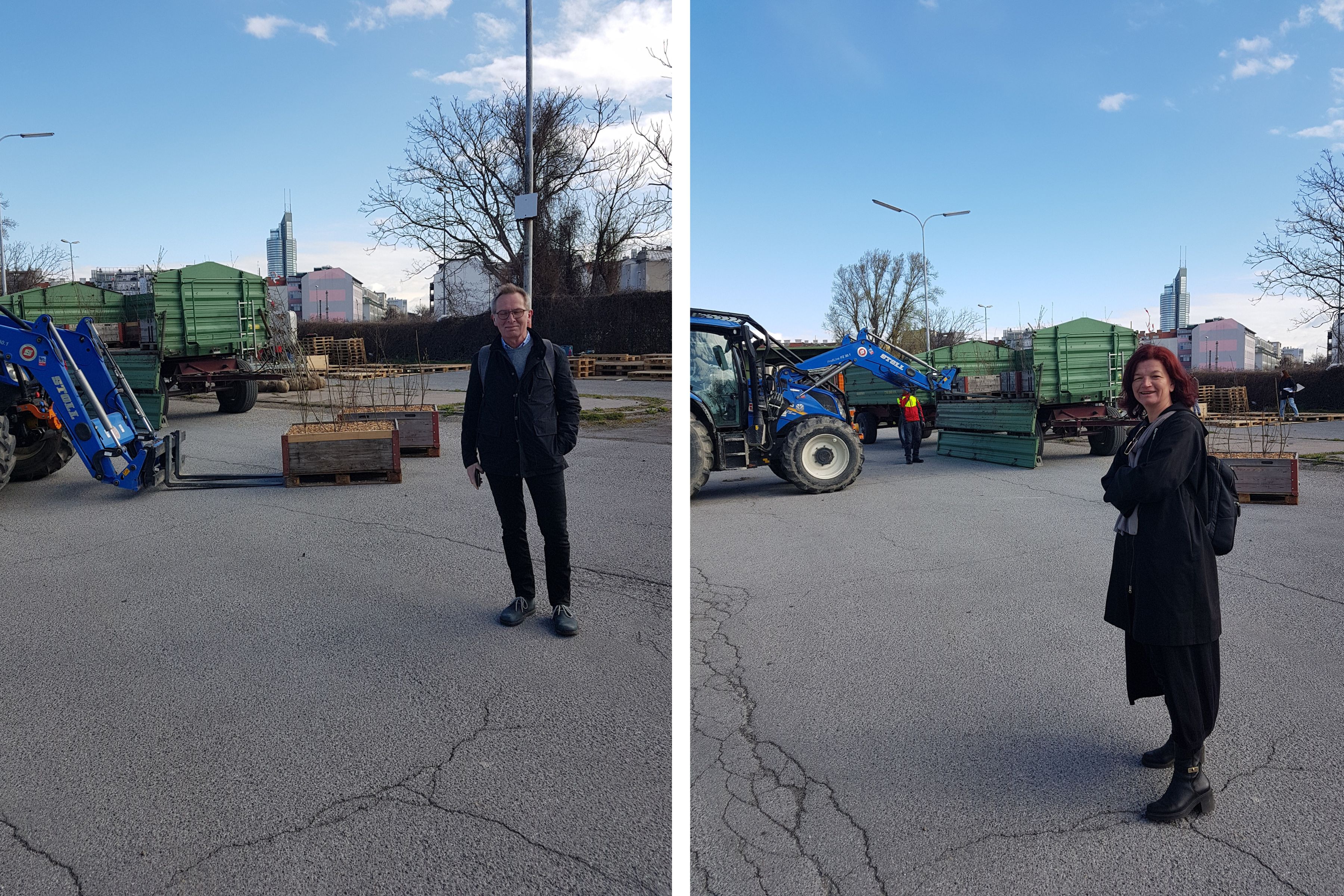
(Left) Peter Holzer and Renate Hammer (right) during setup work on the grounds of the Vienna Climate Biennale 2024
© IBRI
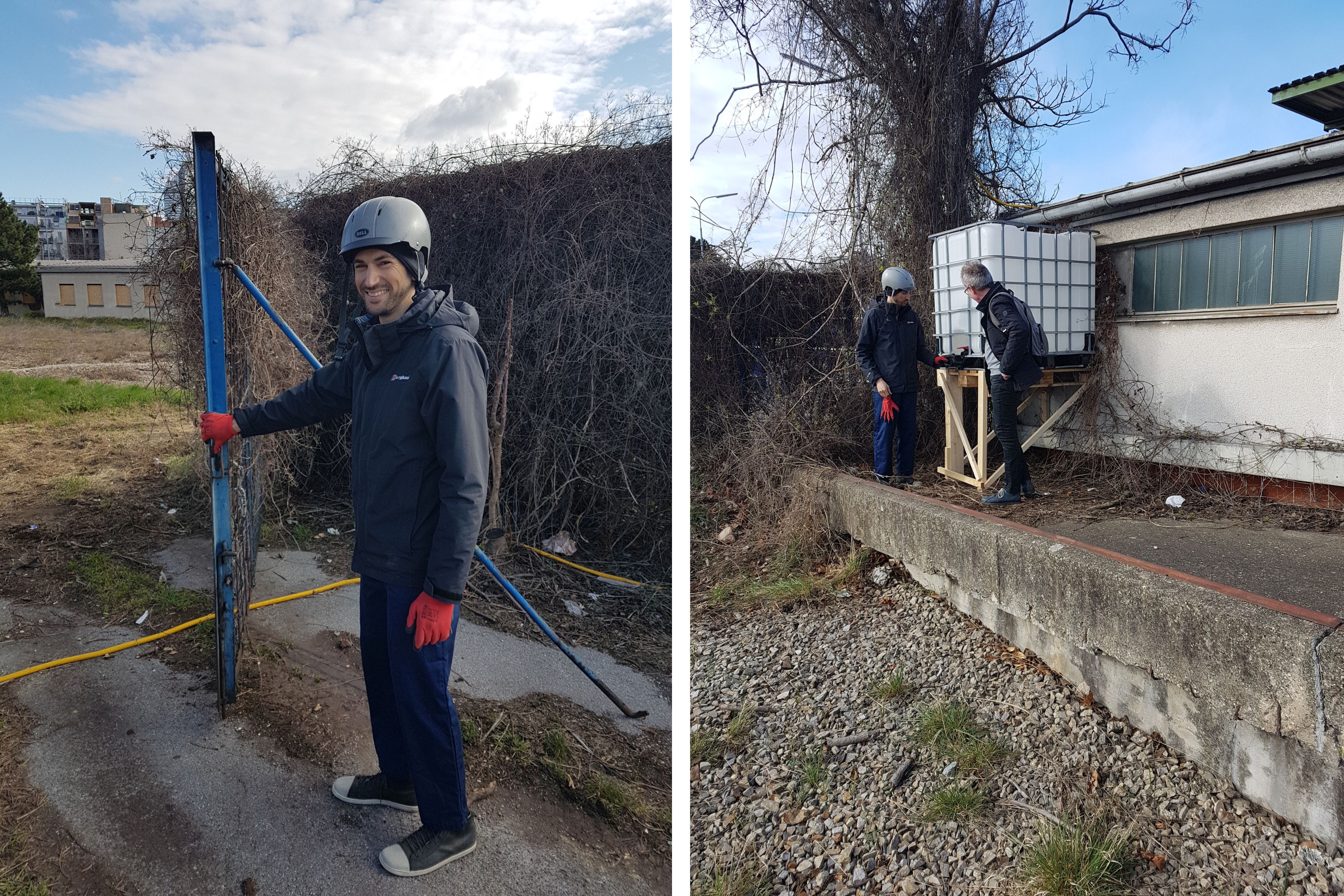
Philipp Stern during setup work on the grounds of the Vienna Climate Biennale 2024 (left) and collection of rainwater for the demo mock up on the grounds of the Vienna Climate Biennale 2024 (right)
© IBRI
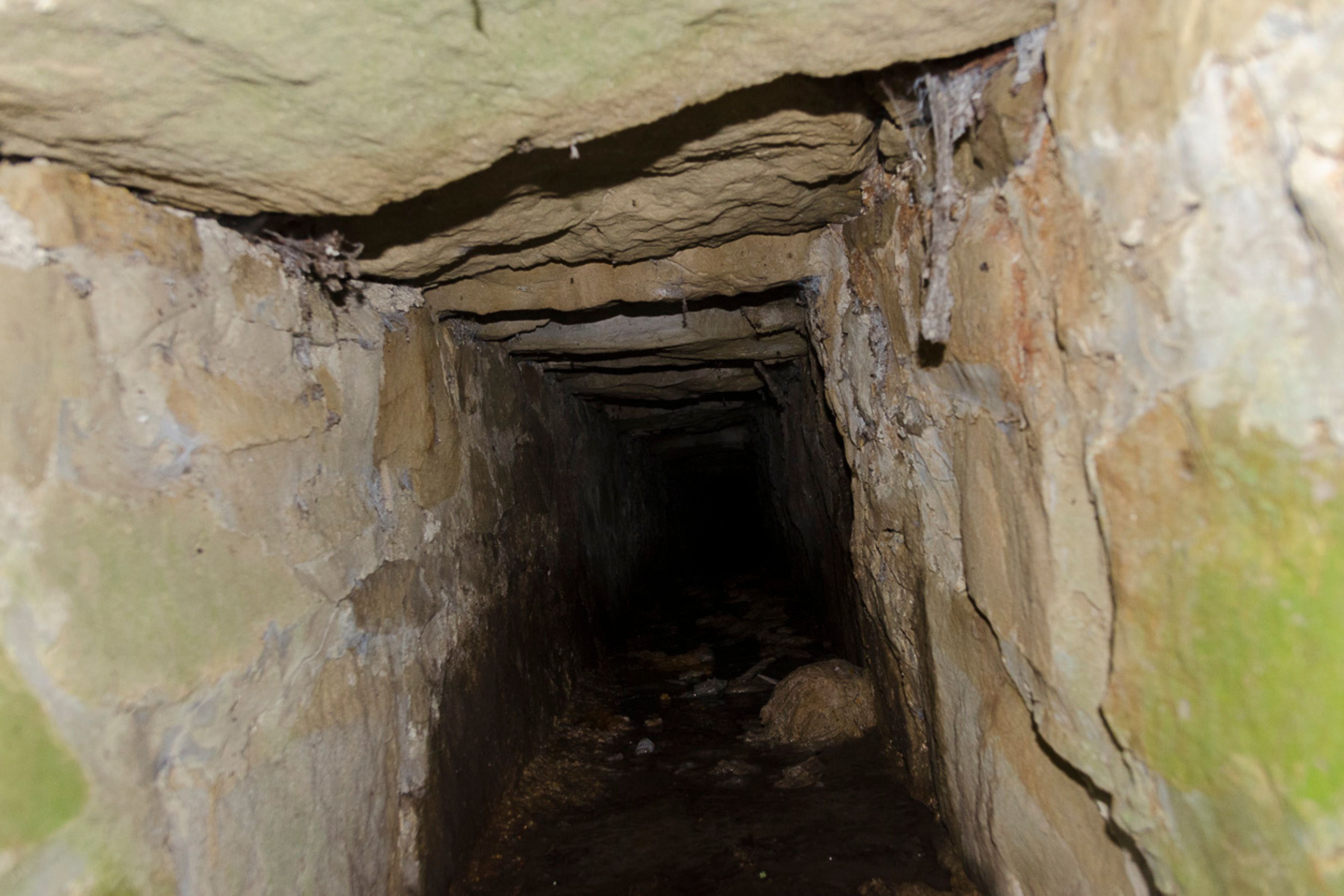
Ottakringer Bach in the Liebhartstal before flowing into the wastewater canal
© IBRI
Results
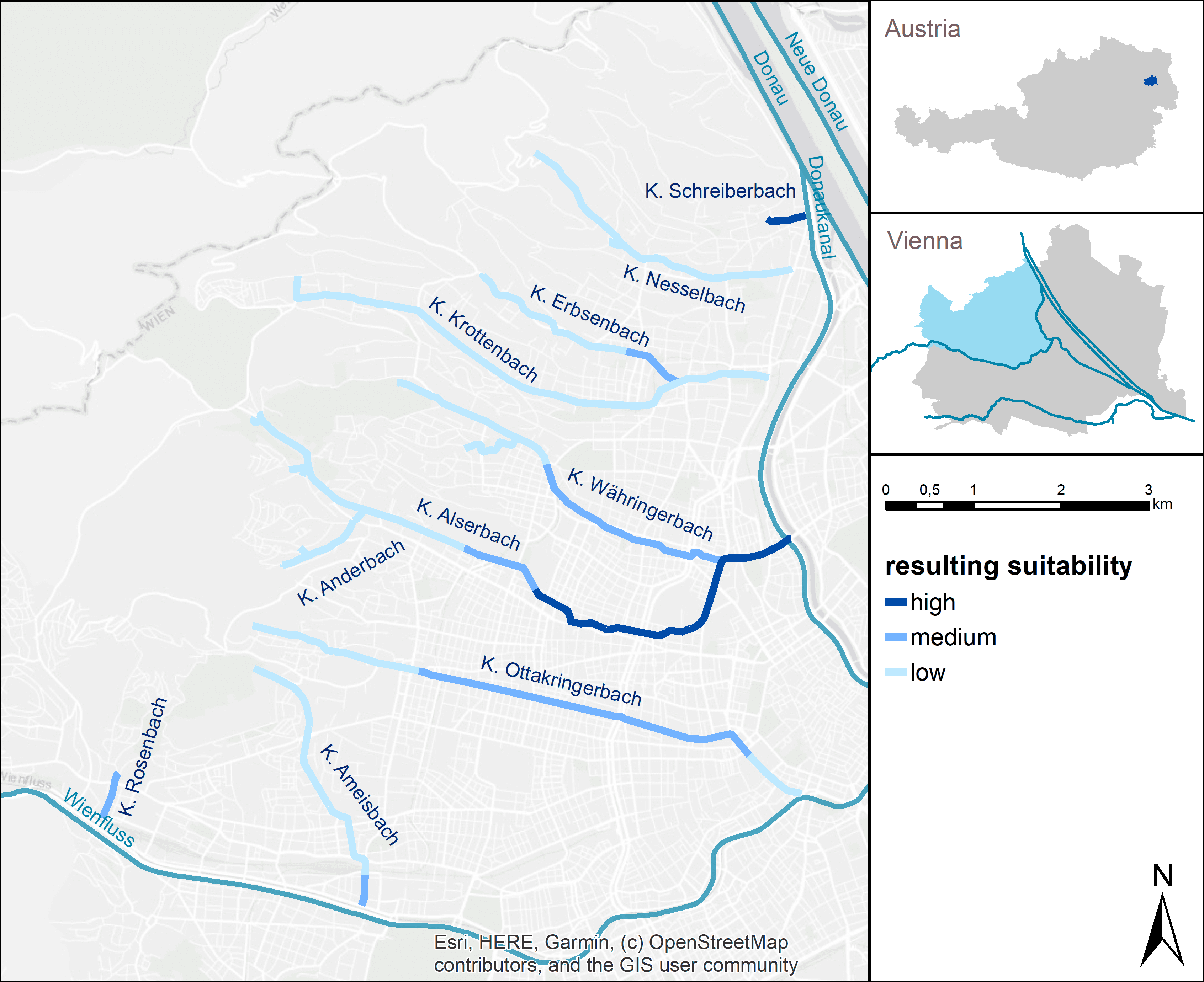
A methodology for potential analysis and public‑space assessment was developed, which can be transferred to other urban areas and cities with similar urban fabric. According to this approach, two (Schreiberbach and Alserbach) of the ten streams analysed exhibit a high suitability for potential reactivation. Microclimatic sensitivity is particularly high in the areas between Elterleinplatz, Gürtel, and Alserbachstraße, as well as at Nussdorfer Platz. The microclimatic simulations show that even small‑scale measures—such as allocating only 10% of street space for tree planting—can achieve effective reductions in physiological equivalent temperature.
Representation of the results of the suitability pre-assessment
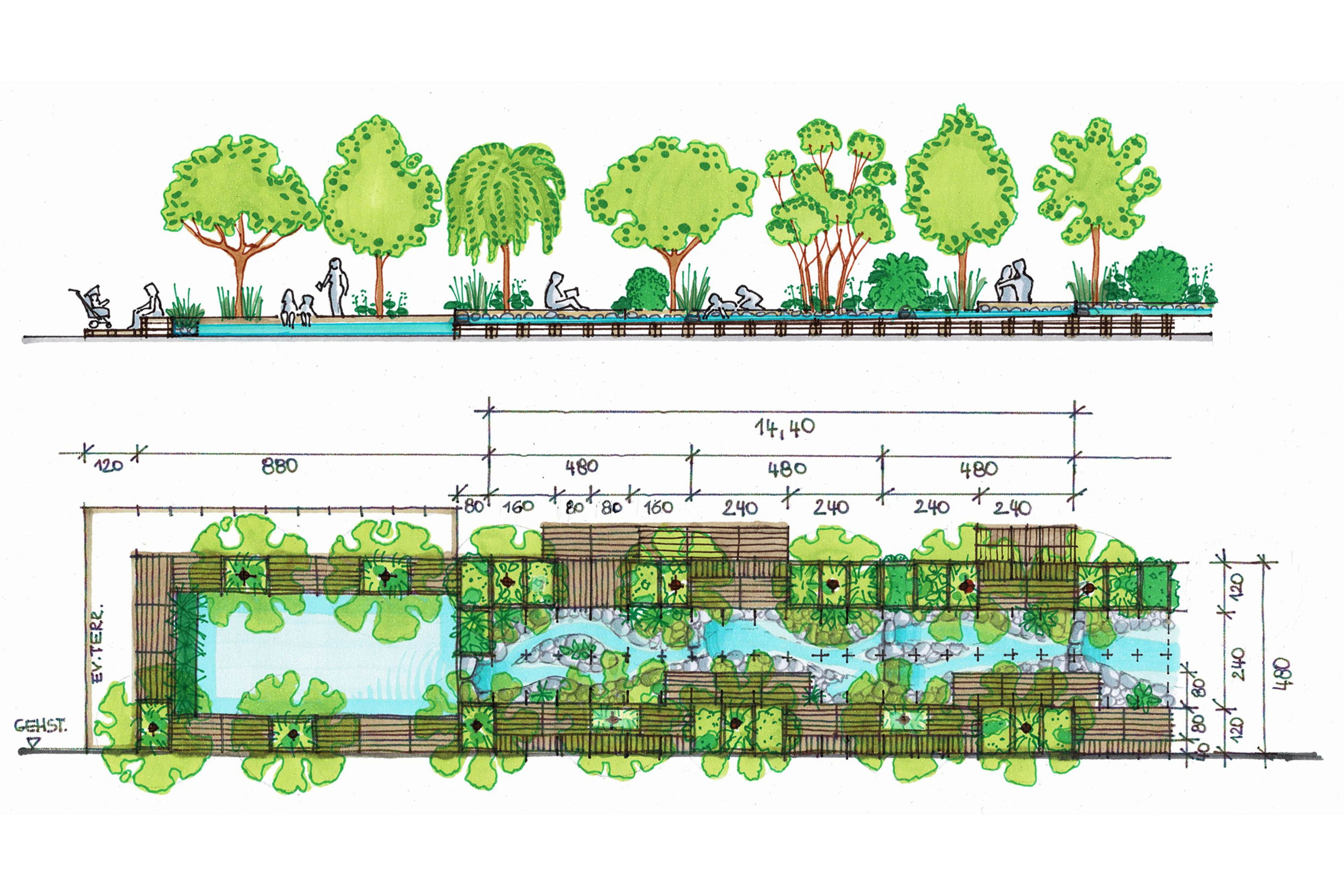
Representation of the demo mock-up
© inprogress consulting
Raports
by Philipp Stern, Magdalena Holzer, and Florian Kretschmer
by Flora Prenner, Helene Müller, Philipp Stern, M. Holzer, Hans Peter Rauch, and Florian Kretschmer